The protein transition: why the new Schijf van Vijf asks for more than just making different choices
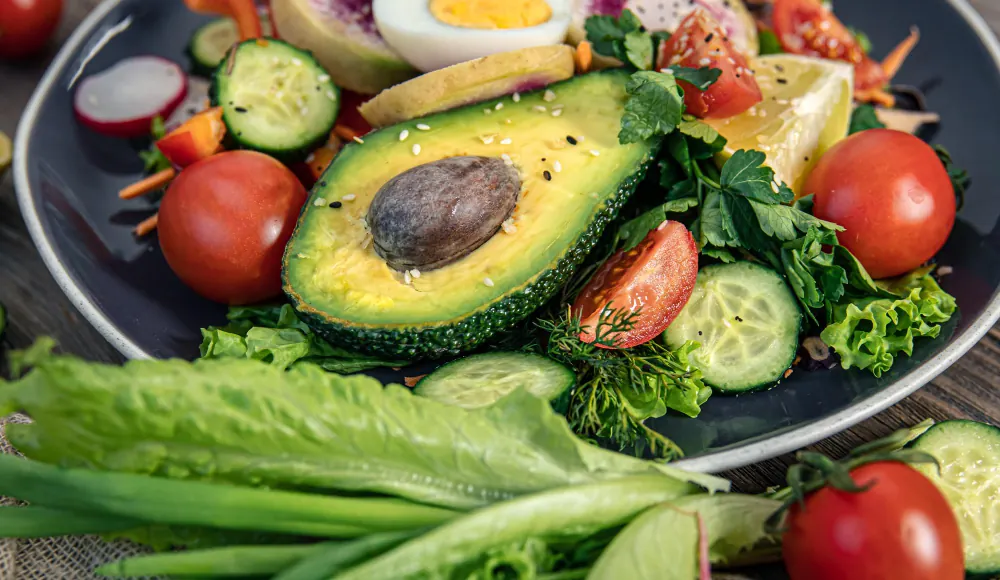
The Voedingscentrum (the Netherlands Nutrition Centre) has renewed the Schijf van Vijf (the Dutch healthy-eating guide). After ten years. And the biggest change is not in a number or a portion size — it is a fundamental shift in how we look at protein.
The new message: eat more plant protein, less animal protein. From a fifty-fifty ratio to 60% plant-based, 40% animal. That may sound like a small adjustment, but it touches something that is deeply rooted for many people: eating habits.
What is the protein transition, actually?
The protein transition is the gradual shift from animal to plant-based protein sources — in our food, but also in food production as a whole. It is a movement that has been under way for some time in science and the food industry, and that has now officially found its way into the best-known nutrition model in the Netherlands.
Why? Because plant-based protein sources — think pulses, nuts, tofu, tempeh — are better than animal sources for both health and the environment. Not as an ideology, but as a measurable fact.
The difference many people overlook: fibre
There is one advantage of plant protein that gets too little attention in most discussions, and it is actually the most practical argument of all: if you eat plant protein, you automatically get fibre with it.
A chicken breast provides protein. Nothing more, nothing less. A portion of lentils provides protein and fibre and minerals.
That is no small detail. Most people in the Netherlands structurally eat too little fibre — on average around 23 grams a day, while the recommendation is 30-40 grams. Fibre is essential for healthy gut function, stable blood sugar and a feeling of fullness after eating. It also feeds the good bacteria in your gut microbiome, which in turn influence your immune system, your mood and your energy level.
In other words: anyone who makes the protein transition almost unnoticeably solves a second nutrition problem at the same time. That is the fibre bonus — and you get it for free.
But then, in practice
So much for the theory. Because this is where the shoe pinches for many people.
Knowing that something is good for you is one thing. Actually changing your eating pattern is something else. And that is not a matter of willpower or discipline — it is a matter of habit.
Eating habits are deeply ingrained. They are tied to upbringing, culture, comfort and routine. The potatoes, the piece of meat, the gravy — for many people that is not just a meal, it is an anchor. Something safe. Something familiar.
Ask someone to simply step away from that, and you meet resistance. Not because people are not motivated, but because that is simply how change works. The brain loves predictability. New habits cost energy, especially at the start.
Gradual works better than drastic
The key lies in small, achievable steps — not in a radical about-turn.
Not: “from now on, eat no more meat.” Instead: “replace one meal a week with a pulse-based dish.”
Not: “eat lentils every day.” Instead: “add a splash of chickpeas to your next salad or soup.”
Small adjustments like these fly under the brain's radar. They don't feel like a sacrifice, but like an experiment. And if such an experiment tastes good — literally — it slowly becomes a habit. And then another. And so the pattern shifts, without you having to turn it into a fight.
That is exactly what the science of behaviour change shows: lasting change is rarely the result of one big decision. It is the result of small choices that add up.
What the new Schijf van Vijf actually asks
The new Schijf van Vijf does not ask for perfection. It asks for a different direction. More pulses on the menu. Less red meat as a matter of course. A handful of nuts as the standard snack. Cheese as a flavour booster instead of a staple topping. Those are not drastic interventions. Those are shifts. And anyone who makes them gradually will find that they land more easily than expected — and that the body soon starts working better for it. More energy, calmer digestion, a more stable feeling of fullness. Not because the new Schijf van Vijf says so. But because your body notices it.
Are you looking for help to turn your eating pattern towards a healthier alternative? Then fill in the form below, and we'll arrange an appointment for an intake.